

 Image 1 of 3
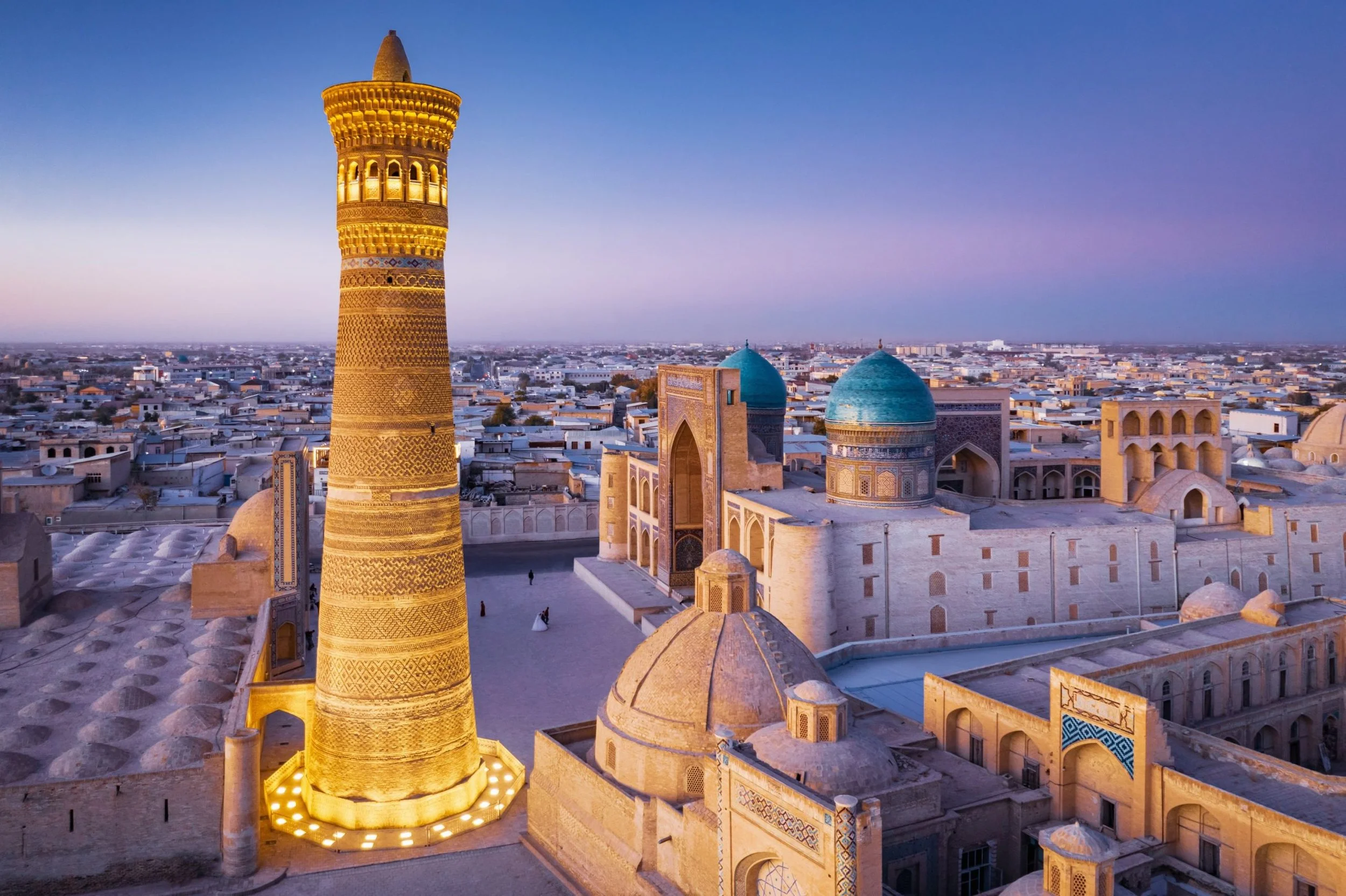 Image 2 of 3
 Image 3 of 3
Bukhara
Bukhara is one of Central Asia’s most evocative cities, where over two millennia of history are concentrated within a compact, walkable old town. Located in modern-day Uzbekistan, it was a major stop on the Silk Road and an influential center of Islamic learning, culture, and architecture. Today Bukhara’s labyrinth of madrasas, mosques, caravanserais, and merchant domes offers an immersive glimpse into medieval urban life framed by enduring local traditions.
Highlights
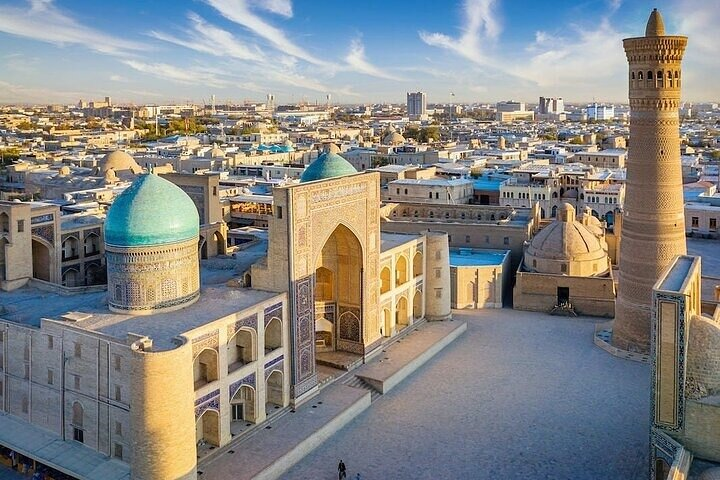
Po-i-Kalyan Complex: The towering Kalyan Minaret (12th century) and the adjacent Kalyan Mosque and Mir-i-Arab Madrasa form the spiritual and visual heart of the city. The minaret’s brickwork and proportions are striking both by day and at night when it is illuminated.
Lyabi Hauz Ensemble: A peaceful plaza centered on a shaded pond, surrounded by 17th–18th century madrasas and tea-houses. It’s a social hub where locals and visitors gather to relax, drink tea, and listen to musicians.
Ark Fortress: The ancient citadel that served as the residence of Bukhara’s emirs. Explore its museums, throne room, mosque, and defensive structures to understand the political history of the region.
Samanid Mausoleum: A masterpiece of early Islamic architecture (10th century) and one of the best-preserved examples of pre-Mongol brick decoration and proportion in Central Asia.
Trading Domes (Toqi): Small covered bazaars where merchants historically sold silk, spices, jewelry, and crafts. They remain lively places to browse carpets, ceramics, and local textiles.
Chor-Minor: A whimsical gateway-like madrasa with four small minarets; an excellent photographic subject and a reminder of Bukhara’s diverse cultural influences.
Cultural Experiences
Tea and Hospitality: Sampling local tea in a teahouse or private home provides insight into Uzbek hospitality. Expect sweet green tea, samsa (savory pastries), and conversation.
Crafts and Workshops: Bukhara has living traditions of embroidery, metalwork, leathercraft, and carpet weaving. Workshops often welcome visitors to watch demonstrations and purchase directly from artisans.
Music and Storytelling: Traditional music and sung poetry are integral to local life—look for performances at cultural centers or small venues around Lyabi Hauz.
Practical Information
Best Time to Visit: Spring (April–June) and autumn (September–November) offer mild temperatures and clearer skies. Summers can be very hot; winters are cold with occasional snow.
Getting Around: The historic center is compact and best explored on foot. Taxis are inexpensive for longer distances within the city. Expect uneven pavements and narrow alleys—comfortable shoes are recommended.
Accommodation: Options range from boutique hotels housed in renovated madrasa buildings to modern hotels. Staying in or near the old town is the most convenient for sightseeing.
Local Customs: Dress modestly when visiting religious sites (shoulders and knees covered). Ask permission before photographing people, especially older residents.
Safety and Health: Bukhara is generally safe for tourists. Carry water, wear sun protection in summer, and take basic precautions for street food if you have a sensitive stomach.
Suggested Itineraries
Half-day: Po-i-Kalyan Complex, Samanid Mausoleum, quick walk through the trading domes.
Full day: Add the Ark Fortress, Lyabi Hauz (lunch/tea), Chor-Minor, and a visit to a craft workshop or small museum.
Two days: Take a slower pace—include evening time at Lyabi Hauz, a guided walking tour of the old town, and a visit to nearby rural attractions or a day trip to a silk-weaving village.
Why Visit
Bukhara distills centuries of Silk Road history into a human-scale city where monumental architecture and everyday life coexist. For travelers interested in history, architecture, and authentic cultural encounters, Bukhara offers a richly textured, highly photogenic experience that rewards slow exploration.
Bukhara
Bukhara is one of Central Asia’s most evocative cities, where over two millennia of history are concentrated within a compact, walkable old town. Located in modern-day Uzbekistan, it was a major stop on the Silk Road and an influential center of Islamic learning, culture, and architecture. Today Bukhara’s labyrinth of madrasas, mosques, caravanserais, and merchant domes offers an immersive glimpse into medieval urban life framed by enduring local traditions.
Highlights
Po-i-Kalyan Complex: The towering Kalyan Minaret (12th century) and the adjacent Kalyan Mosque and Mir-i-Arab Madrasa form the spiritual and visual heart of the city. The minaret’s brickwork and proportions are striking both by day and at night when it is illuminated.
Lyabi Hauz Ensemble: A peaceful plaza centered on a shaded pond, surrounded by 17th–18th century madrasas and tea-houses. It’s a social hub where locals and visitors gather to relax, drink tea, and listen to musicians.
Ark Fortress: The ancient citadel that served as the residence of Bukhara’s emirs. Explore its museums, throne room, mosque, and defensive structures to understand the political history of the region.
Samanid Mausoleum: A masterpiece of early Islamic architecture (10th century) and one of the best-preserved examples of pre-Mongol brick decoration and proportion in Central Asia.
Trading Domes (Toqi): Small covered bazaars where merchants historically sold silk, spices, jewelry, and crafts. They remain lively places to browse carpets, ceramics, and local textiles.
Chor-Minor: A whimsical gateway-like madrasa with four small minarets; an excellent photographic subject and a reminder of Bukhara’s diverse cultural influences.
Cultural Experiences
Tea and Hospitality: Sampling local tea in a teahouse or private home provides insight into Uzbek hospitality. Expect sweet green tea, samsa (savory pastries), and conversation.
Crafts and Workshops: Bukhara has living traditions of embroidery, metalwork, leathercraft, and carpet weaving. Workshops often welcome visitors to watch demonstrations and purchase directly from artisans.
Music and Storytelling: Traditional music and sung poetry are integral to local life—look for performances at cultural centers or small venues around Lyabi Hauz.
Practical Information
Best Time to Visit: Spring (April–June) and autumn (September–November) offer mild temperatures and clearer skies. Summers can be very hot; winters are cold with occasional snow.
Getting Around: The historic center is compact and best explored on foot. Taxis are inexpensive for longer distances within the city. Expect uneven pavements and narrow alleys—comfortable shoes are recommended.
Accommodation: Options range from boutique hotels housed in renovated madrasa buildings to modern hotels. Staying in or near the old town is the most convenient for sightseeing.
Local Customs: Dress modestly when visiting religious sites (shoulders and knees covered). Ask permission before photographing people, especially older residents.
Safety and Health: Bukhara is generally safe for tourists. Carry water, wear sun protection in summer, and take basic precautions for street food if you have a sensitive stomach.
Suggested Itineraries
Half-day: Po-i-Kalyan Complex, Samanid Mausoleum, quick walk through the trading domes.
Full day: Add the Ark Fortress, Lyabi Hauz (lunch/tea), Chor-Minor, and a visit to a craft workshop or small museum.
Two days: Take a slower pace—include evening time at Lyabi Hauz, a guided walking tour of the old town, and a visit to nearby rural attractions or a day trip to a silk-weaving village.
Why Visit
Bukhara distills centuries of Silk Road history into a human-scale city where monumental architecture and everyday life coexist. For travelers interested in history, architecture, and authentic cultural encounters, Bukhara offers a richly textured, highly photogenic experience that rewards slow exploration.