

 Image 1 of 1
travel to Turkey
Turkey — where Europe meets Asia, history meets hospitality, and landscapes shift from turquoise coastlines to lunar-caped fairy chimneys. Below is a concise, practical guide to planning a trip that balances major sights with authentic experiences.
Why go
Rich historical layers: Hittite, Greek, Roman, Byzantine, Seljuk, Ottoman.
Dramatic and varied landscapes: Mediterranean beaches, Cappadocia’s volcanic rock formations, Taurus Mountains, Black Sea forests.
Culinary depth: regional specialties (meze, kebabs, baklava, gözleme, seafood).
Warm hospitality and accessible urban life with modern infrastructure.
When to travel
Best overall: April–June and September–October. Mild temperatures, fewer crowds.
Summer (July–August): Hot and crowded on the Aegean and Mediterranean coasts; good for beach-focused trips.
Winter (December–March): Skiing in Uludağ or Palandöken; quiet sightseeing in Istanbul, fewer crowds but shorter daylight.
Note: Ramadan observance varies; festivals and market hours can change.
Top places and what to do
Istanbul: Hagia Sophia, Topkapı Palace, Blue Mosque, Grand Bazaar, Spice Bazaar, Bosphorus cruise, neighborhoods (Sultanahmet, Beyoğlu, Karaköy, Kadıköy). Don’t miss a ferry ride between continents.
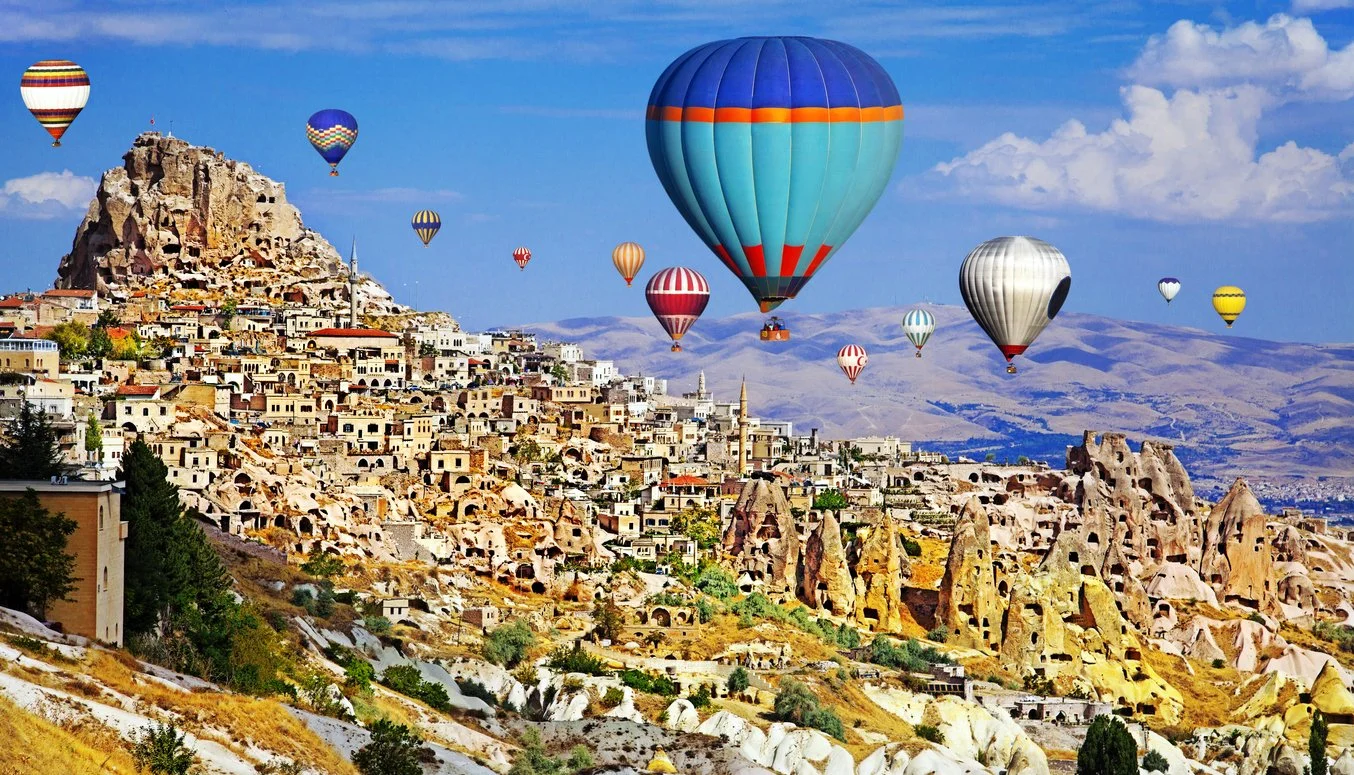
Cappadocia: Hot-air balloon at dawn, Göreme Open-Air Museum, underground cities (Derinkuyu, Kaymaklı), hiking in Rose and Pigeon Valleys, cave hotels.
Antalya & Turquoise Coast: Konyaaltı and Lara beaches, Old Town (Kaleiçi), Düden and Kursunlu waterfalls, day boat trips to Göçek and Kekova.
Ephesus & İzmir: Ephesus archaeological site, House of the Virgin Mary, Temple of Artemis (site), İzmir promenade and bazaars.
Pamukkale & Hierapolis: Travertine terraces, ancient thermal city ruins.
Black Sea region: Tea plantations around Rize, traditional wooden houses in Amasya, mountain hiking.
Southeastern Anatolia (Mardin, Gaziantep, Şanlıurfa): Distinctive architecture, world-class cuisine (Gaziantep pistachio baklava), ancient sites like Göbekli Tepe nearby.
Practical planning
Entry requirements: Check passport validity and visa requirements for your nationality; many visitors must obtain an e‑visa online before arrival.
Currency: Turkish lira (TRY). Credit cards widely accepted in cities; carry cash for markets and rural areas.
Language: Turkish. English widely understood in tourist areas; learn basic phrases to enhance interactions.
Transport: Domestic flights are frequent and affordable (Istanbul to Cappadocia/Antalya/Izmir). High-speed trains connect Istanbul–Ankara–Konya. Intercity buses are comfortable and extensive. Ferries: Istanbul and along the Aegean coast.
Safety and health: Turkey is generally safe for travelers; follow local advice, avoid demonstrations, secure belongings in crowded sites. Tap water is chlorinated—use bottled water if sensitive.
Connectivity: SIM cards available at airports; eSIM options increasingly common.
Cultural tips
Dress: Conservative dress is not required in tourist areas; however, dress modestly when visiting mosques — shoulders and knees covered, women may be asked to cover hair with a scarf provided at many sites.
Tipping: Common but not mandatory. 5–10% in restaurants if service is not included; small tips for guides, drivers, and hotel staff appreciated.
Bargaining: Expected in bazaars and for goods at markets; not appropriate in fixed-price shops.
Etiquette: Remove shoes when entering private homes; accept tea when offered as a sign of hospitality.
Sample itineraries (7–10 days)
7 days: Istanbul (3 days) — Cappadocia (2 days, includes balloon) — Konya or Ankara quick stop (optional) — Return via Istanbul.
10 days: Istanbul (3) — Ephesus/İzmir (2) — Pamukkale (1) — Fethiye or Antalya (3) for coast and boat tours.
Food to seek out
Street food: Simit (sesame bread ring), köfte (meatballs), dürüm (wrap), roasted corn.
Regional specialties: İskender kebab in Bursa, baklava in Gaziantep, kumpir in Ortaköy (Istanbul), çiğ köfte in Şanlıurfa, seafood along the Aegean.
Drinks: Turkish tea, Turkish coffee, ayran (yogurt drink), raki (anise spirit).
Useful packing list
Comfortable walking shoes
Turkey — where Europe meets Asia, history meets hospitality, and landscapes shift from turquoise coastlines to lunar-caped fairy chimneys. Below is a concise, practical guide to planning a trip that balances major sights with authentic experiences.
Why go
Rich historical layers: Hittite, Greek, Roman, Byzantine, Seljuk, Ottoman.
Dramatic and varied landscapes: Mediterranean beaches, Cappadocia’s volcanic rock formations, Taurus Mountains, Black Sea forests.
Culinary depth: regional specialties (meze, kebabs, baklava, gözleme, seafood).
Warm hospitality and accessible urban life with modern infrastructure.
When to travel
Best overall: April–June and September–October. Mild temperatures, fewer crowds.
Summer (July–August): Hot and crowded on the Aegean and Mediterranean coasts; good for beach-focused trips.
Winter (December–March): Skiing in Uludağ or Palandöken; quiet sightseeing in Istanbul, fewer crowds but shorter daylight.
Note: Ramadan observance varies; festivals and market hours can change.
Top places and what to do
Istanbul: Hagia Sophia, Topkapı Palace, Blue Mosque, Grand Bazaar, Spice Bazaar, Bosphorus cruise, neighborhoods (Sultanahmet, Beyoğlu, Karaköy, Kadıköy). Don’t miss a ferry ride between continents.
Cappadocia: Hot-air balloon at dawn, Göreme Open-Air Museum, underground cities (Derinkuyu, Kaymaklı), hiking in Rose and Pigeon Valleys, cave hotels.
Antalya & Turquoise Coast: Konyaaltı and Lara beaches, Old Town (Kaleiçi), Düden and Kursunlu waterfalls, day boat trips to Göçek and Kekova.
Ephesus & İzmir: Ephesus archaeological site, House of the Virgin Mary, Temple of Artemis (site), İzmir promenade and bazaars.
Pamukkale & Hierapolis: Travertine terraces, ancient thermal city ruins.
Black Sea region: Tea plantations around Rize, traditional wooden houses in Amasya, mountain hiking.
Southeastern Anatolia (Mardin, Gaziantep, Şanlıurfa): Distinctive architecture, world-class cuisine (Gaziantep pistachio baklava), ancient sites like Göbekli Tepe nearby.
Practical planning
Entry requirements: Check passport validity and visa requirements for your nationality; many visitors must obtain an e‑visa online before arrival.
Currency: Turkish lira (TRY). Credit cards widely accepted in cities; carry cash for markets and rural areas.
Language: Turkish. English widely understood in tourist areas; learn basic phrases to enhance interactions.
Transport: Domestic flights are frequent and affordable (Istanbul to Cappadocia/Antalya/Izmir). High-speed trains connect Istanbul–Ankara–Konya. Intercity buses are comfortable and extensive. Ferries: Istanbul and along the Aegean coast.
Safety and health: Turkey is generally safe for travelers; follow local advice, avoid demonstrations, secure belongings in crowded sites. Tap water is chlorinated—use bottled water if sensitive.
Connectivity: SIM cards available at airports; eSIM options increasingly common.
Cultural tips
Dress: Conservative dress is not required in tourist areas; however, dress modestly when visiting mosques — shoulders and knees covered, women may be asked to cover hair with a scarf provided at many sites.
Tipping: Common but not mandatory. 5–10% in restaurants if service is not included; small tips for guides, drivers, and hotel staff appreciated.
Bargaining: Expected in bazaars and for goods at markets; not appropriate in fixed-price shops.
Etiquette: Remove shoes when entering private homes; accept tea when offered as a sign of hospitality.
Sample itineraries (7–10 days)
7 days: Istanbul (3 days) — Cappadocia (2 days, includes balloon) — Konya or Ankara quick stop (optional) — Return via Istanbul.
10 days: Istanbul (3) — Ephesus/İzmir (2) — Pamukkale (1) — Fethiye or Antalya (3) for coast and boat tours.
Food to seek out
Street food: Simit (sesame bread ring), köfte (meatballs), dürüm (wrap), roasted corn.
Regional specialties: İskender kebab in Bursa, baklava in Gaziantep, kumpir in Ortaköy (Istanbul), çiğ köfte in Şanlıurfa, seafood along the Aegean.
Drinks: Turkish tea, Turkish coffee, ayran (yogurt drink), raki (anise spirit).
Useful packing list
Comfortable walking shoes